Research question / Snapshot
Paper snapshot
This project frames macroeconomic tail risk as a distribution that should be estimated flexibly over time, not forced into a fixed parametric shape. The result is a cleaner view of when downside consumption risk becomes unusually severe and how that compares with upside variation.
Abstract
This paper proposes a Bayesian nonparametric approach for assessing macroeconomic tail risk using a time-dependent Dirichlet process mixture model. Applied to a dataset spanning several decades across OECD and non-OECD countries, the framework captures fluctuations in extremely negative consumption outcomes, reveals left-skewed downside distributions, and allows downside and upside macroeconomic risk to be evaluated dynamically through time.
What the paper does
Instead of assuming one fixed distribution for rare macroeconomic events, the model lets the shape of the distribution adapt through time. That flexibility is important when tail behavior changes across countries, regimes, and stress periods, because rigid specifications can hide the very dynamics the paper is trying to measure.
Why it matters
For policy analysis, macro-finance, and risk monitoring, the paper offers a way to reason about severe downside scenarios with more structure and fewer hard parametric assumptions. The output is not just a static estimate of disaster risk, but a time-varying picture of how macroeconomic vulnerability evolves.
Publication record
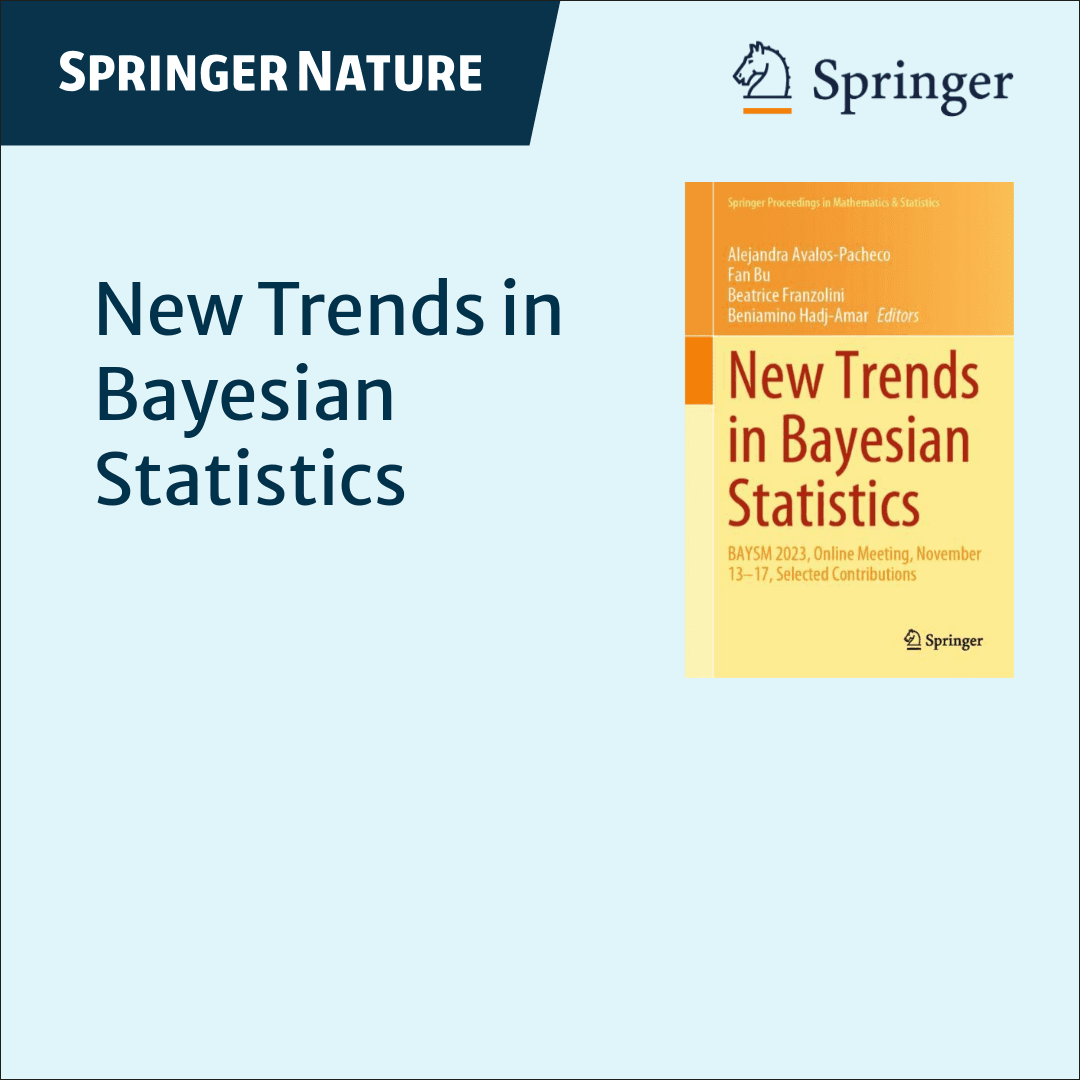
Mena, R. H., Ruggiero, M., & Singh, A. (2026). Bayesian Nonparametric Estimation of Time-Varying Macroeconomic Tail Risk. In A. Avalos-Pacheco, F. Bu, B. Franzolini, & B. Hadj-Amar (Eds.), New Trends in Bayesian Statistics (pp. 57-66). Cham: Springer Nature Switzerland.
- Publisher
- Springer Nature Switzerland
- Volume
- New Trends in Bayesian Statistics
- Pages
- 57-66